Visa, BILL and Billtrust Launch a Live Pilot of AI Agents Paying Supplier Invoices
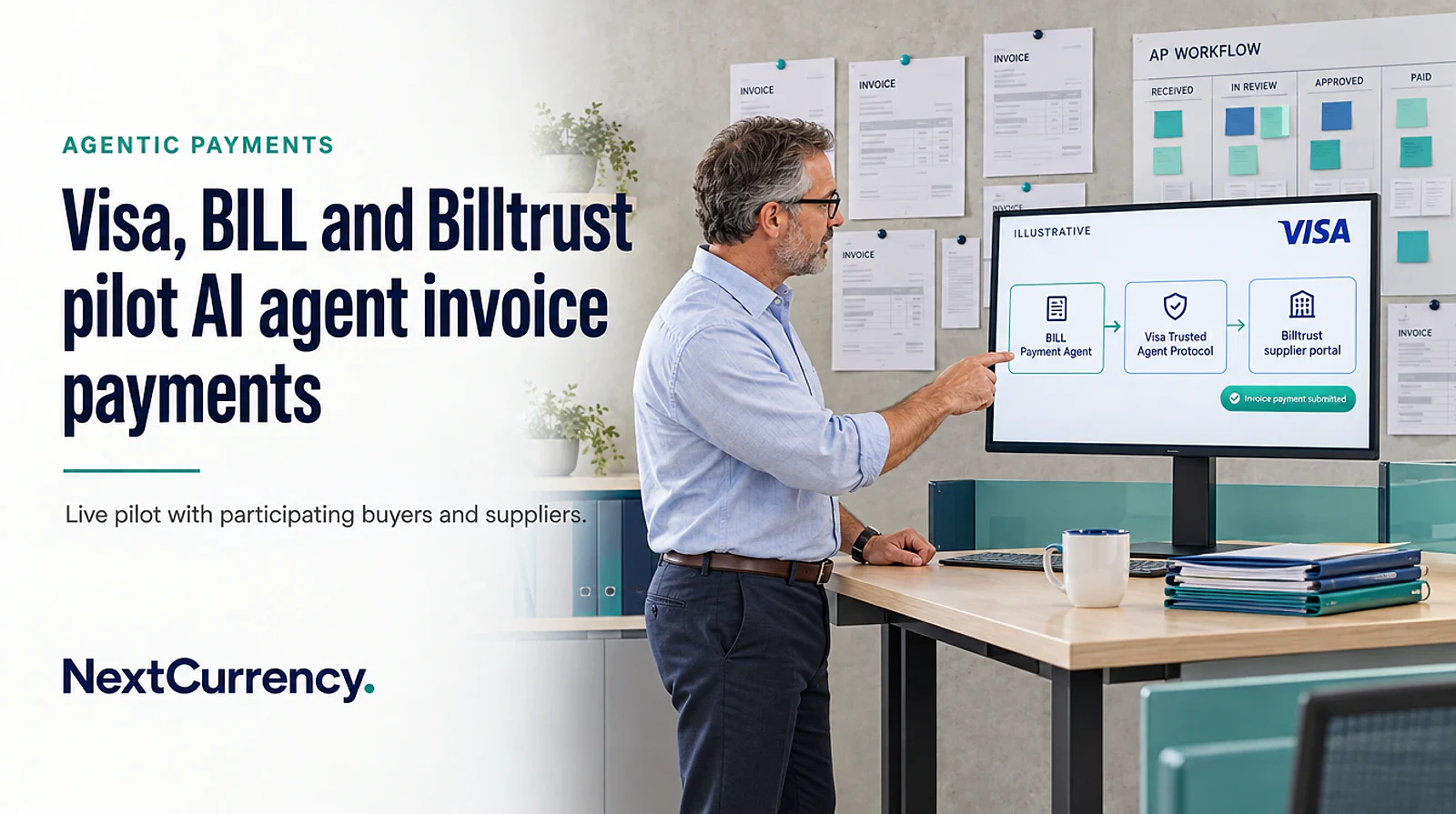
A BILL payment agent registered through Visa's Trusted Agent Protocol now pays approved invoices through Billtrust supplier portals using tokenized card credentials, with no shared portal logins. The pilot is processing end-to-end transactions with participating buyers and suppliers.
By Daniel Osei, Journalist, Payments and Cards
Visa, BILL and Billtrust said on 20 October 2026 that they have launched a live pilot in which an AI agent pays approved buyer invoices through supplier payment portals from start to finish. Visa issued the announcement from Las Vegas. The companies say the pilot is live and processing end-to-end transactions with participating buyers using BILL and Billtrust suppliers.
It is a pilot with participating customers, not a general release. The companies did not disclose transaction counts, values or how many buyers and suppliers are taking part.
How the agent gets through the portal
Supplier portals usually expect a person to log in and type in card details, and they use CAPTCHA and bot blocking to keep automated traffic out. That last step is often why an approved invoice still waits for an employee.
In the pilot, the BILL Payment Agent is registered through Visa's Trusted Agent Protocol and Agentic Directory. It uses tokenized payment credentials and controls that follow the buyer's approved payment instructions. On the receiving side, Billtrust uses the Trusted Agent Protocol to recognise and authenticate the agent and let it into the portal. According to Visa, that authentication "can satisfy the site protections historically provided by CAPTCHA and other bot blocking mechanisms, without requiring an additional agent login."
The companies list what the pilot provides:
- an authenticated AI agent acting for an identified buyer
- tokenized payment credentials instead of shared supplier-portal logins
- payment controls tied to the customer's approved payment instruction
- a payment path tied to the specific invoice
- visibility into the authorization and completion of the payment
The tools sit within Visa's Intelligent Commerce portfolio.
Why business-to-business payments are the test case
Most agentic-commerce demonstrations so far have been consumer checkouts. Accounts payable is a better fit for early automation. The payment is already approved, the amount and payee are fixed by an invoice, and what remains is routine data entry. The pilot also tackles a real point of resistance. Suppliers block bots to prevent fraud, so an agent can only pay through a portal if the supplier can tell an authorised agent from an attacker. Here the supplier platform authenticates the agent, rather than the buyer handing over a login.
The model keeps the payment on card rails. For suppliers that typically means card acceptance costs on each invoice paid this way. For Visa, it means commercial volume running through its network and its agent credentials. Suppliers set the terms through their acceptance policy, according to the release.
What comes next
The companies say they "will continue exploring opportunities in agentic payments" as the pilot progresses. They have not published a timetable for wider availability, pricing or plans to add other portal providers.